
Winners, survivors and extraordinary stories from the 2026 RORC Round Britain and Ireland Race
 The 50th anniversary edition of the RORC Round Britain and Ireland Race has come to a close - Enjoy photos, blogs and videos sent in to the media team by the crews on the Competitor Blog HERE
Thirty-two boats, 182 sailors from five continents and 1,805 nautical miles around Britain and Ireland. The numbers convey the scale of the 50th anniversary RORC Round Britain and Ireland Race but barely begin to describe what unfolded after the starting cannon fired on 9 August 2026.
For more than two weeks the race played out around one of offshore sailing's most complicated courses: Land's End, the wild west of Ireland, St Kilda and Muckle Flugga, followed by the navigational ordeal of the North Sea and English Channel. With Atlantic lows, wind holes, big seas and glassy calms. Boats surfed at more than 25 knots and at other times kedged on anchor. Sails were repaired, a boom shattered, crews were stretched by fatigue, and an owl became one of the unexpected stars of the race. There were outstanding winners, but the enduring story of 2026 was its sailors.
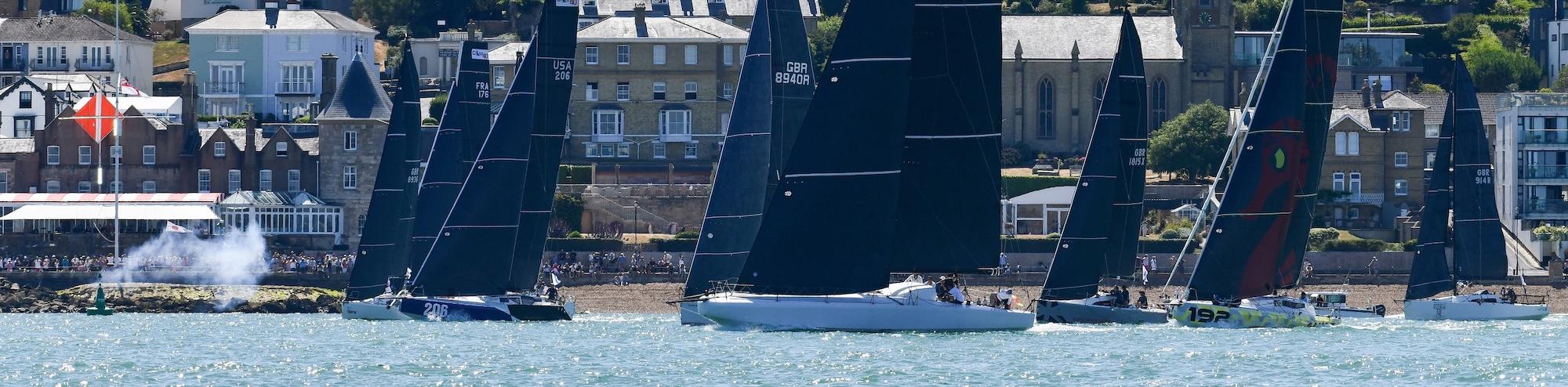
1.jpeg) The start of the RORC Round Britain and Ireland Race from Cowes on Sunday 9 August © James Tomlinson/RORC
The start of the RORC Round Britain and Ireland Race from Cowes on Sunday 9 August © James Tomlinson/RORC
A Forecast for 1,805 Miles
Even before the start, the complexity of what lay ahead was clear. At the Skippers' Briefing at the RORC Cowes Clubhouse, PredictWind meteorologist Arnaud Monges presented the evolving weather picture for a race stretching from the English Channel to 61 degrees north.
There was never going to be one forecast that applied to everybody. The fastest boats might reach an Atlantic system while it was still developing; smaller yachts could arrive days later to find something completely different. Between them lay fronts, ridges of high pressure, coastal effects, tidal gates and more than 2,000 miles of opportunities.
Pace found powerful southerlies and accelerated north with a 486-mile day while boats farther south were fighting for breadth through light airs and fog. Later, Palanad 4 appeared to seize control of IRC Overall before the advantage swung back again to the Volvo 70 Pace.
.jpeg) Johnny Vincent's Volvo 70 Pace © Rick Tomlinson/RORC
Johnny Vincent's Volvo 70 Pace © Rick Tomlinson/RORC
Pace Takes the Biggest Prize
Johnny Vincent's Volvo 70 Pace achieved the double: Monohull Line Honours and victory overall under IRC. Pace crossed the Royal Yacht Squadron finish line at 04:17:31 BST on Sunday 16 August after 6 days, 14 hours, 47 minutes and 31 seconds. The tracker recorded 2,113 miles actually sailed and west of Ireland the Juan Kouyoumdjian design touched 27 knots of boat speed.
For Vincent, whose previous longest offshore passage was a delivery of around 1,300 miles, it was a deeply personal journey. Around him was an immensely experienced team including Stu Bannatyne, Neal McDonald and navigator Jules Salter.
"The Round Britain and Ireland Race is not one yacht race," Vincent reflected. "It is a series of four races joined together. There were the familiar Fastnet waters, the wild Atlantic passage north, the emotional turn for home at Muckle Flugga and then the obstacle course of the North Sea and English Channel, encountered when everybody was already tired.”
The greatest satisfaction for Vincent came when IRC Overall was confirmed. "It is very emotional and, honestly, mind-blowing.”
Antoine Magré's radical Mach 50 Palanad 4 fought Pace in a tremendous corrected-time battle, at one stage projected several hours ahead overall before the weather turned the contest again. "My heart goes out to Palanad 4," Vincent said. "We had a real battle royal."
.jpeg) Palanad 4 © James Tomlinson/RORC
Palanad 4 © James Tomlinson/RORC
Behind them, Jens Kellinghusen's Ker 56 Varuna 6 completed an impressive lap. At 79, Kellinghusen was the oldest sailor in the fleet, an achievement navigator Mike Broughton described as tremendous.
Valdo Dhoyer and Charles Houal's Volvo 60 Challenge Ocean added another great ocean-racing machine to the leading group, while Graeme Lewis's maxi Venomous, co-skippered by Chris Brooks, was forced to retire. All aboard were safe and one of the crews enduring memories will be a juvenile orca leaping by the maxi’s starboard quarter.
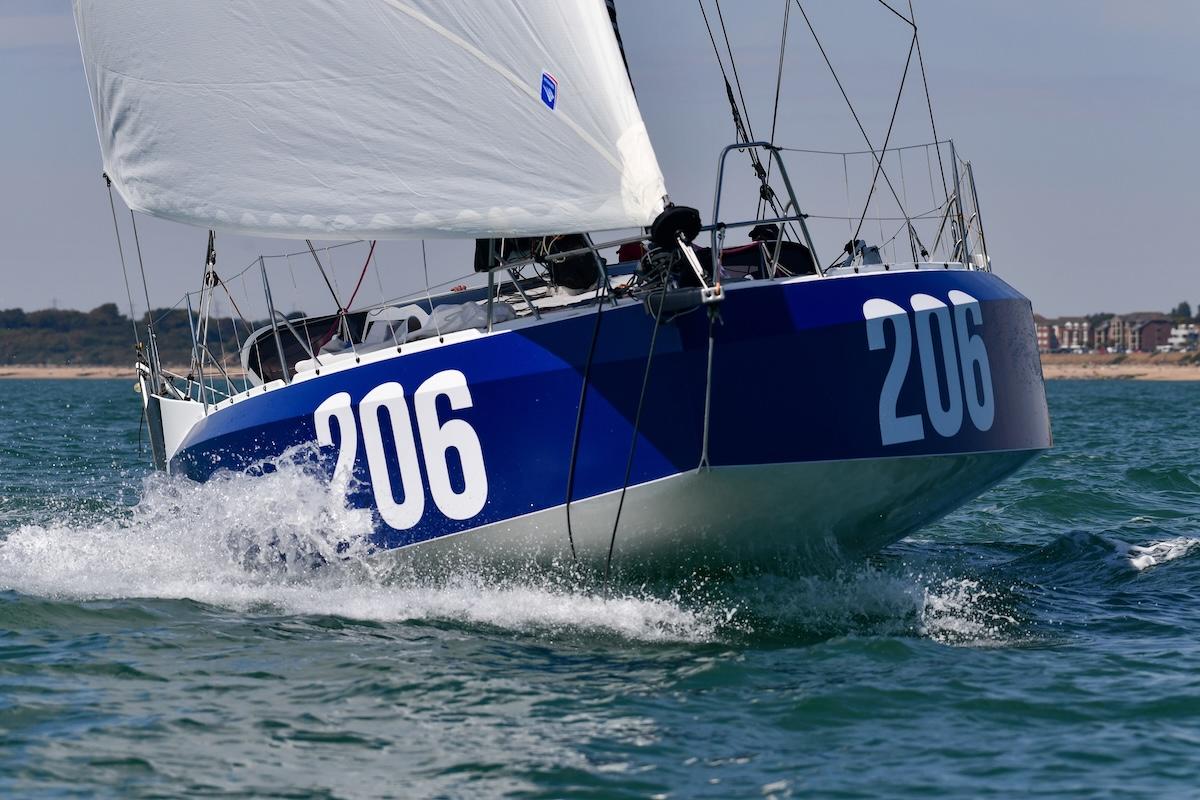 Class40 Swift © Rick Tomlinson/RORC
Class40: No Quarter Given
Immediately behind the fastest IRC yachts came one of the most intense battles of the entire race. Pierre Le Boucher's Penfret, Greg Leonard's Swift and Jon Tyrrel's Gambit spent much of the course locked together.
The three modern scow-bow Class40s raced north through the Atlantic and around Muckle Flugga before attacking the North Sea almost in jet-fighter formation. By the final approach to the Solent, they could still see one another.
Penfret crossed first, but a subsequent hearing determined that she had not sailed the proper course. Victory therefore went to Leonard's Swift, whose crew included Vendée Globe finisher Miranda Merron and Gérald Veniard, with Tyrrel's Gambit second. The older Dutch Class40 Tjoba, sailed by Minus Tjeenk Willink and Erik van Vuuren, had earlier retired with technical issues.
Pata Negra Rules IRC One
Sam Hall's Lombard 46 Pata Negra produced another accomplished performance to take IRC One. The boat had won the race overall in 2018 under previous ownership, but this campaign belonged to 25-year-old Sam and his father Andrew Hall, racing under the Welsh Dragon of Pwllheli Sailing Club with a predominantly young crew.
There was sail damage, frustrating weather and even 45 minutes kedged at Beachy Head during the final stages. "The biggest takeaway is how complicated and constantly changing this course is," said Sam. "It has not been a tough race physically, but mentally it has been exhausting."
Behind them, German sailors Tim Behrendt and Andreas Buchheim completed the race double-handed aboard JPK 1180 Frida after almost 30 years of sailing together, they were the first double-handed team to finish the marathon.
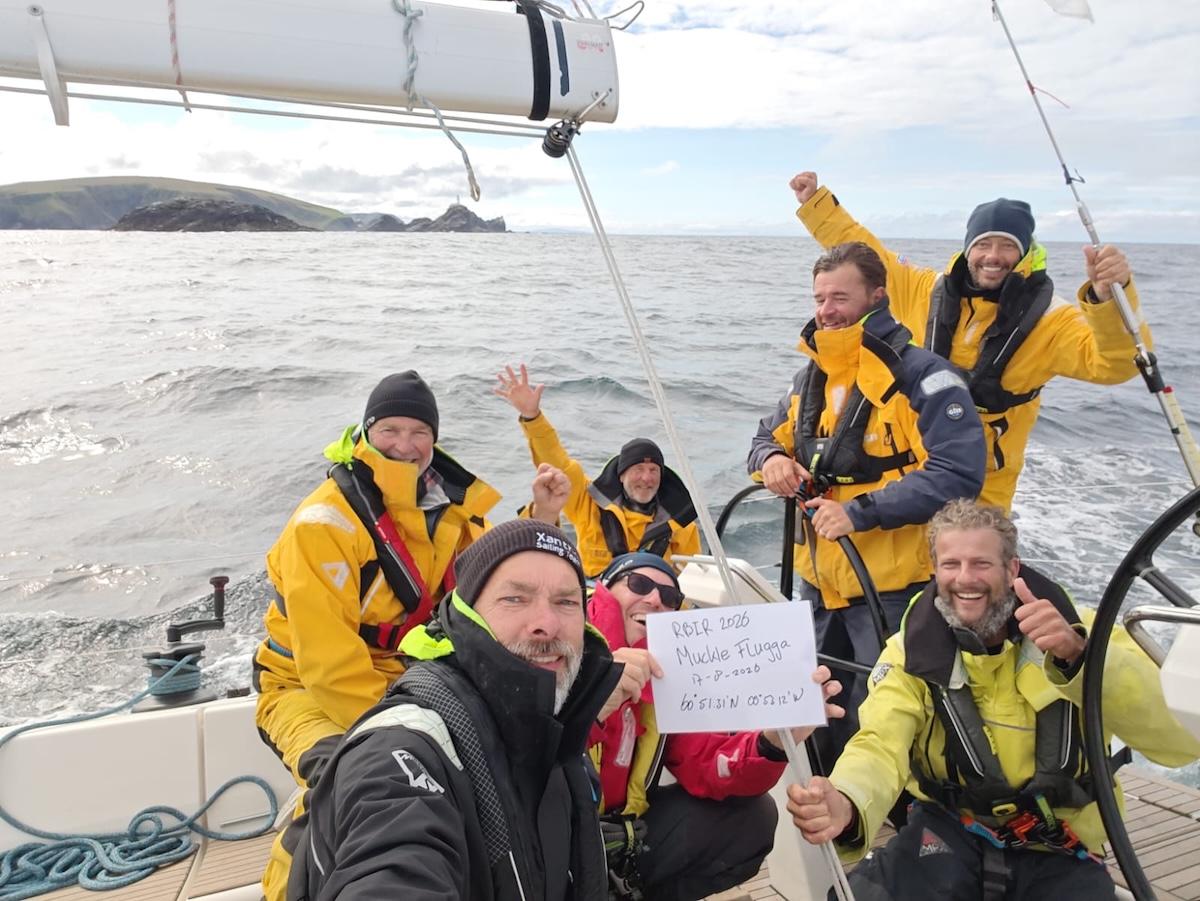 Dutch team on Xp44 Xantho at Muckle Flugga © Xantho
Nick Edmonds' J/45 Stickleback, originally bought primarily for family cruising, completed its own remarkable step up into serious offshore racing. Cameron Davis's Farr 40 Espresso Martini Too came home with a charter crew drawn from a mixture of backgrounds and experience. With no autopilot, the race demanded plenty from everyone aboard, including developing the confidence and skill to helm downwind at night during nearly two weeks at sea. Several of the crew enjoyed the experience so much that they are now planning to join the Royal Ocean Racing Club. The Dutch Xp 44 Xantho and Frans van Cappelle and Michelle Witsenburg's J/122 Moana added still more Corinthian variety to the fleet.
.jpeg) Ian Hoddle and Willow Bland on Sky Business - Game On © Rick Tomlinson/RORC
Ian Hoddle and Willow Bland on Sky Business - Game On © Rick Tomlinson/RORC
Forty-Five Seconds After 1,805 Miles
Perhaps the defining contest among the smaller boats came from two Sun Fast 3300s. Simon Bamford and Zeb Fellows on Kestrel crossed the finish line just 45 seconds ahead of Ian Hoddle and Willow Bland on Sky Business - Game On after nearly 12 days at sea.
IRC time correction reversed the order, giving Game On victory in both IRC Two and IRC Two-Handed. For Hoddle, twice previously runner-up in the race, it was third time lucky. "For the last three days I could hardly sleep," he admitted. "It was the most intense racing I have ever done."
Fellows even climbed Kestrel's mast in around 30 knots after a jib problem near Beachy Head. Yet the rivalry stopped at the dock. When Bland revealed that Game On's Jetboil had failed and she had survived much of the final day on Babybels, Kestrel's shore team was waiting with pizza.
Sam White and Nathan Steffenoni completed another strong race aboard JPK 1080 Mzungu!, while Gavin Howe and Shetlander Maggie Adamson raced Tigris double-handed.
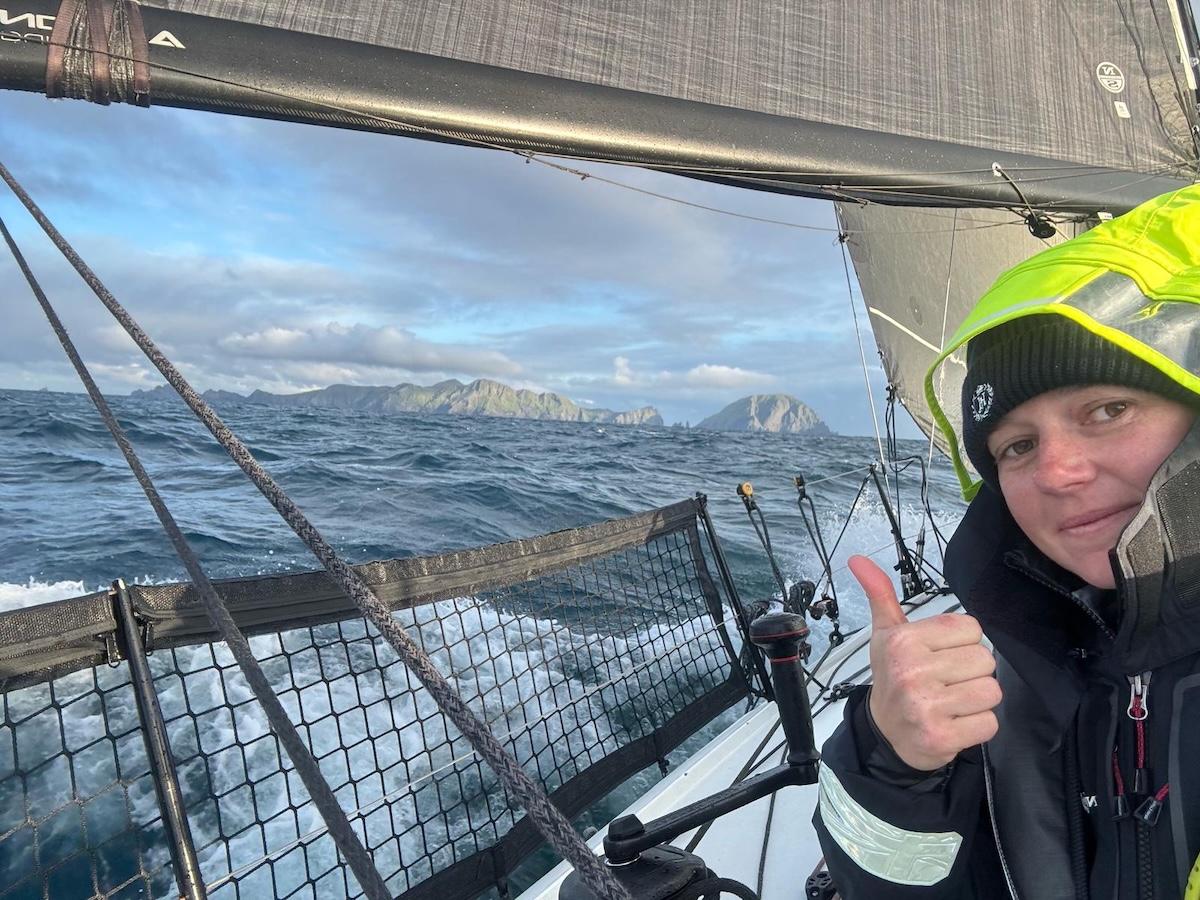 Maggie Adamson on Tigris - passing home waters © Tigris
For Adamson, sailing through home waters provided one of the most personal passages of the race. Friends sailed out to wave and her mother even offered to deliver a Sunday roast. Outside assistance is forbidden, so the sailors had to make do with on-board pot noodles.
Inka Luhrs and Richard Bretherton brought Zanzibar home after another determined double-handed campaign, but their story had an unusual postscript. After nearly two weeks living together on a Sun Fast 3200, they decided they still weren't sick of boat life or each other. Rather than go home, Team Zanzibar went cruising.
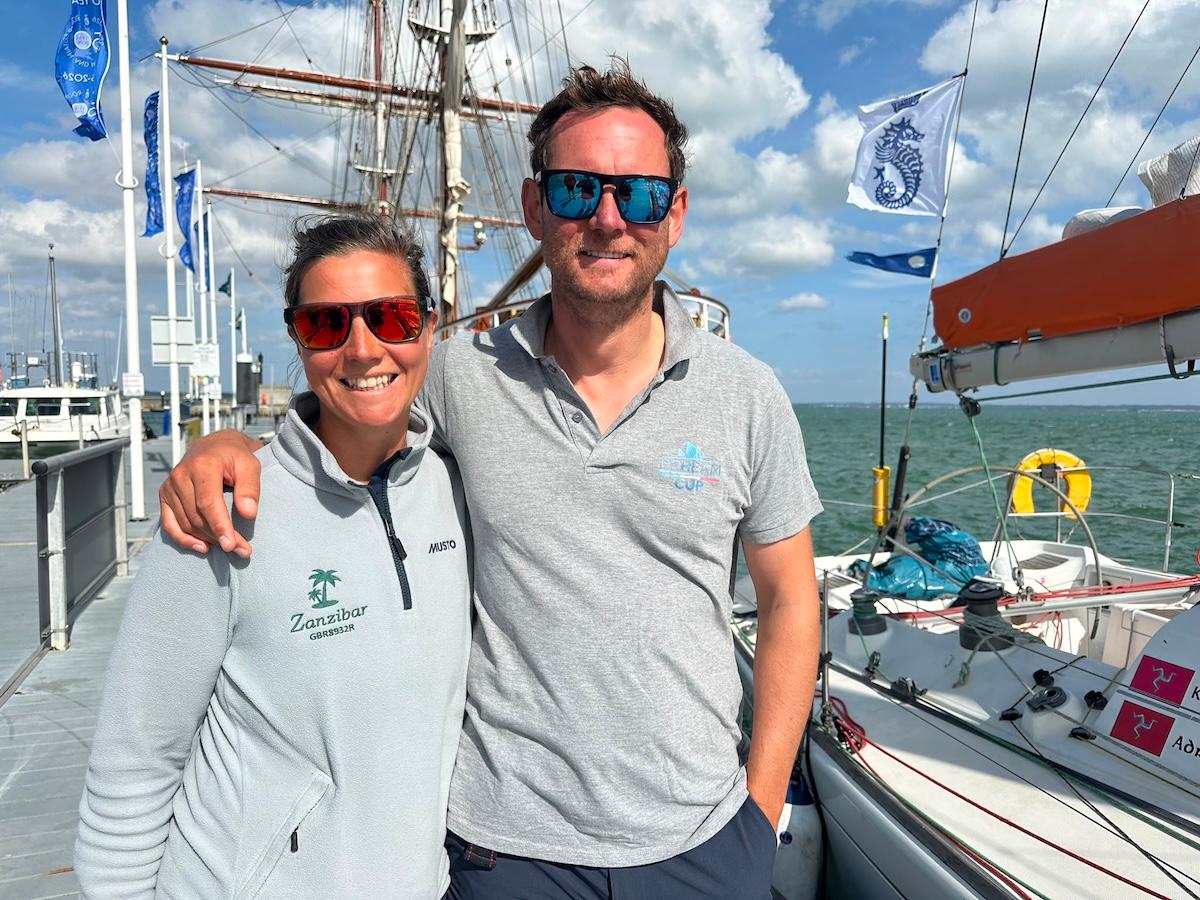 Inka Luhrs and Richard Bretherton raced on their Sun Fast 3200 Zanzibar and are now off cruising! © RORCBenjamin Grosman and Klaus Rasmussen completed their Danish campaign aboard Ronin, adding another strong finish from the double-handed fleet. Richard and Emma Breese completed their longest offshore race together aboard the J/105 Mojo. Father and daughter endured a huge broach after hitting 16.5 knots, recovered the boat, completed a controlled spinnaker drop and carried on.
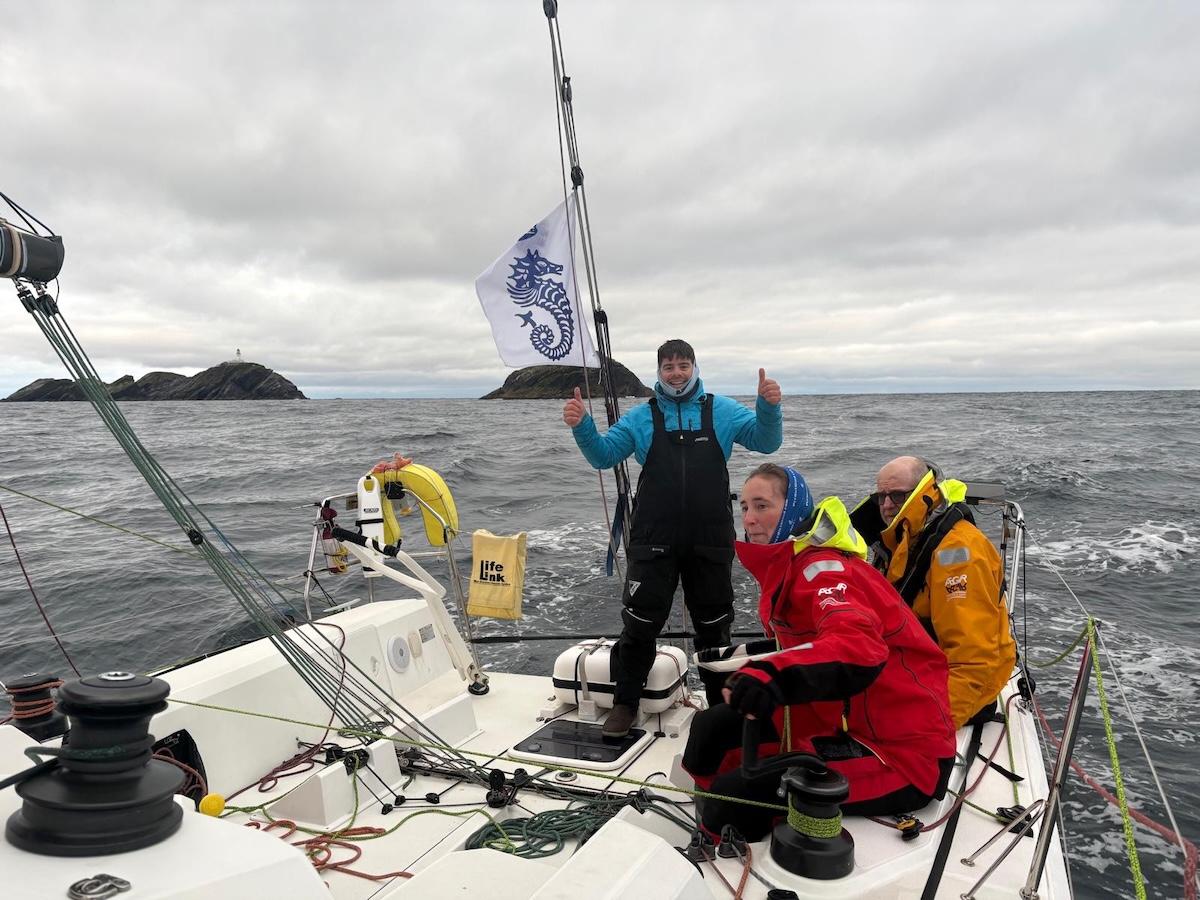 Bellino at Muckle Flugga - the northernmost landmark of the course © Bellino
Broken, But Still Racing
Rob Craigie and RORC Commodore Deb Fish had finished second overall by just seven minutes in 2022 racing Bellino double-handed. This time they returned four-up with Griffin graduates Nicole Hemeryck and Joe Griffiths and were again firmly in contention until the boom broke with around 200 miles remaining. Their chance of victory disappeared. Their race did not. Bellino continued towards Cowes without a mainsail, still fighting for every place.
"All credit to the crew," Fish reported. "We have been pushing as hard since the breakage as we were before it." Not long after finishing and getting some rest, the RORC Commodore was back on Trinity Landing welcoming other competitors home.
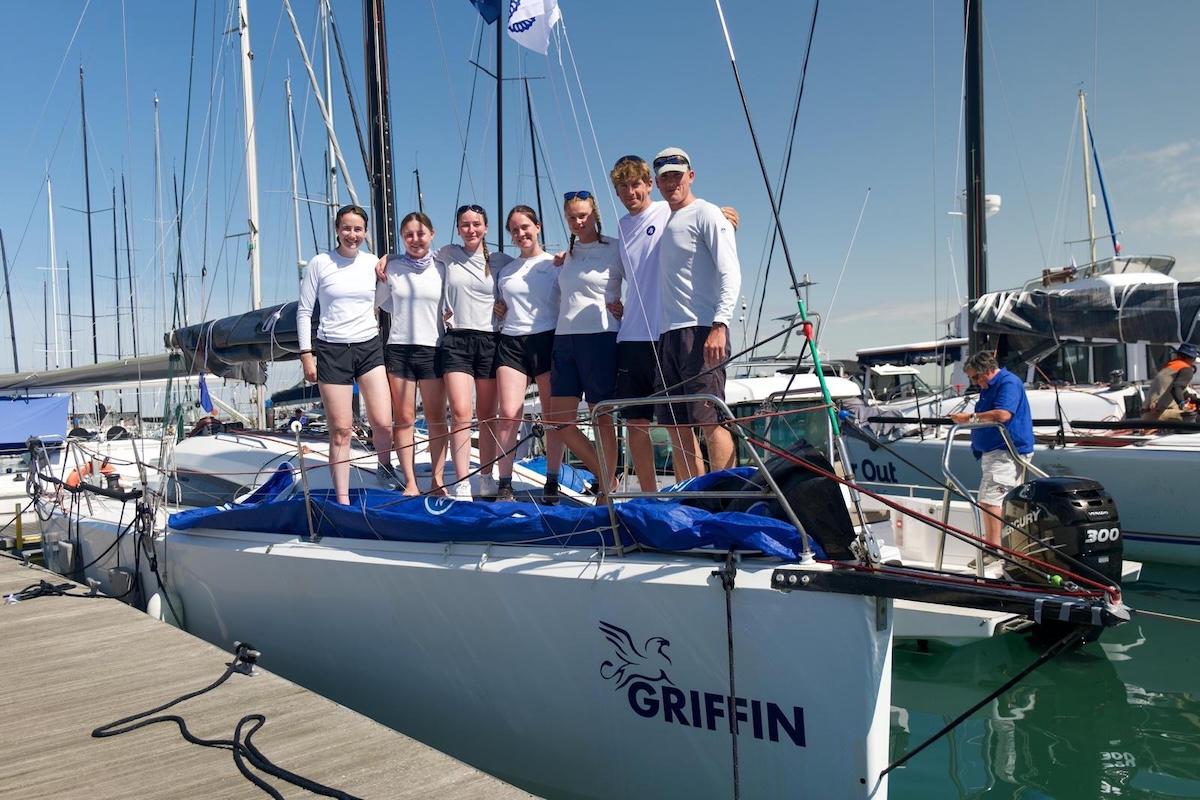 The young team on © RORC Griffin - ready for their biggest challenge
The Next Generation and Breaking Barriers
Eight young sailors completed the course aboard RORC Griffin, co-skippered by Nuala Sellwood and Albert Barber. "It feels a bit surreal," Sellwood said. "I'm so proud of the crew. It's been the most fun I've ever had in two weeks. I laughed so much." There were frighteningly fast downwind runs after St Kilda, curries cooked and eaten together, mistakes made and lessons learned. Barber even celebrated his birthday at sea. They were delighted simply to have kept pace with far more experienced campaigns including Mzungu! and Bellino.
Their advice to other young sailors was simple: "Just do it."
The Griffin sailors were far from the only members of a new generation taking on the race. Almost all of the crew of Paddy Moriarty's Swan 44 Astrid were in their twenties. Among them was 24-year-old Emily Wright, whose completion of the 1,805-mile course represented an achievement extending far beyond the results sheet.
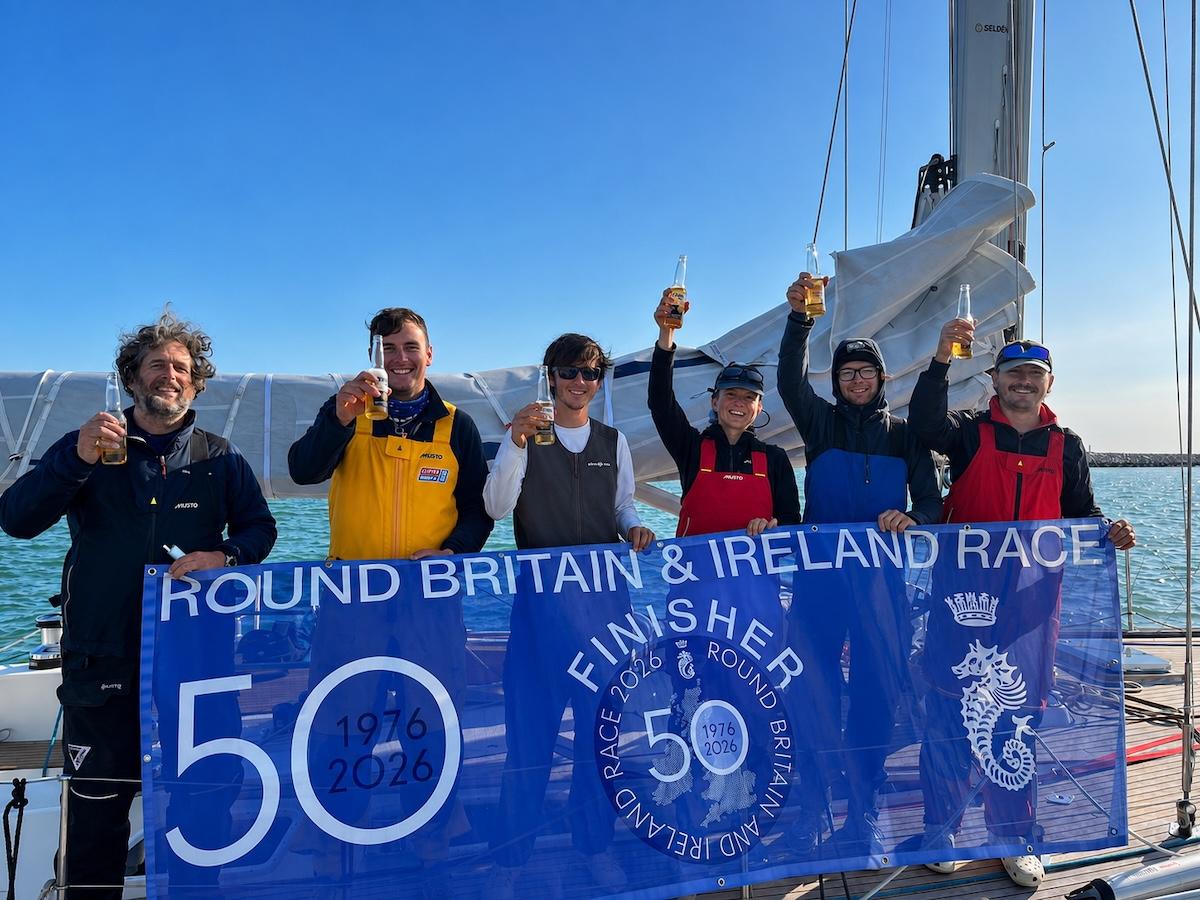 Celebrating their achievement on Swan 44 Astrid after completing the race © RORC
Wright is a registered-blind sailor who was introduced to sailing by the Ellen MacArthur Cancer Trust following cancer diagnosis and treatment at the age of nine. She subsequently represented the British Para Sailing Team at the World Championships.
"I am so grateful to Paddy and Astrid for being so inclusive," Wright said. "I want to inspire more disabled sailors to do adventures like this and for boat owners to be welcoming in the same way Paddy has been."
Her achievement, alongside the Griffin programme and young sailors spread throughout the fleet, demonstrated something important about the modern RORC: offshore racing becomes stronger when opportunity is widened and talented sailors are given the chance to take part.
Wild Encounters Around the Course
For all the concentration on racing, the fleet was rarely alone. Venomous reported orcas, while Stickleback encountered minke whales. Bellino spotted puffins and Kestrel watched gannets working the sea. On Mzungu!, a hawk attempted to land aboard, while Pace spotted an enormous leatherback turtle estimated at around three metres long. Numerous crews also reported dolphins around the course, in some cases following boats for extended periods. For the young sailors aboard RORC Griffin, one North Sea calm became magical when dolphins surrounded the boat while hundreds of seabirds gathered overhead and gannets plunged into the water.
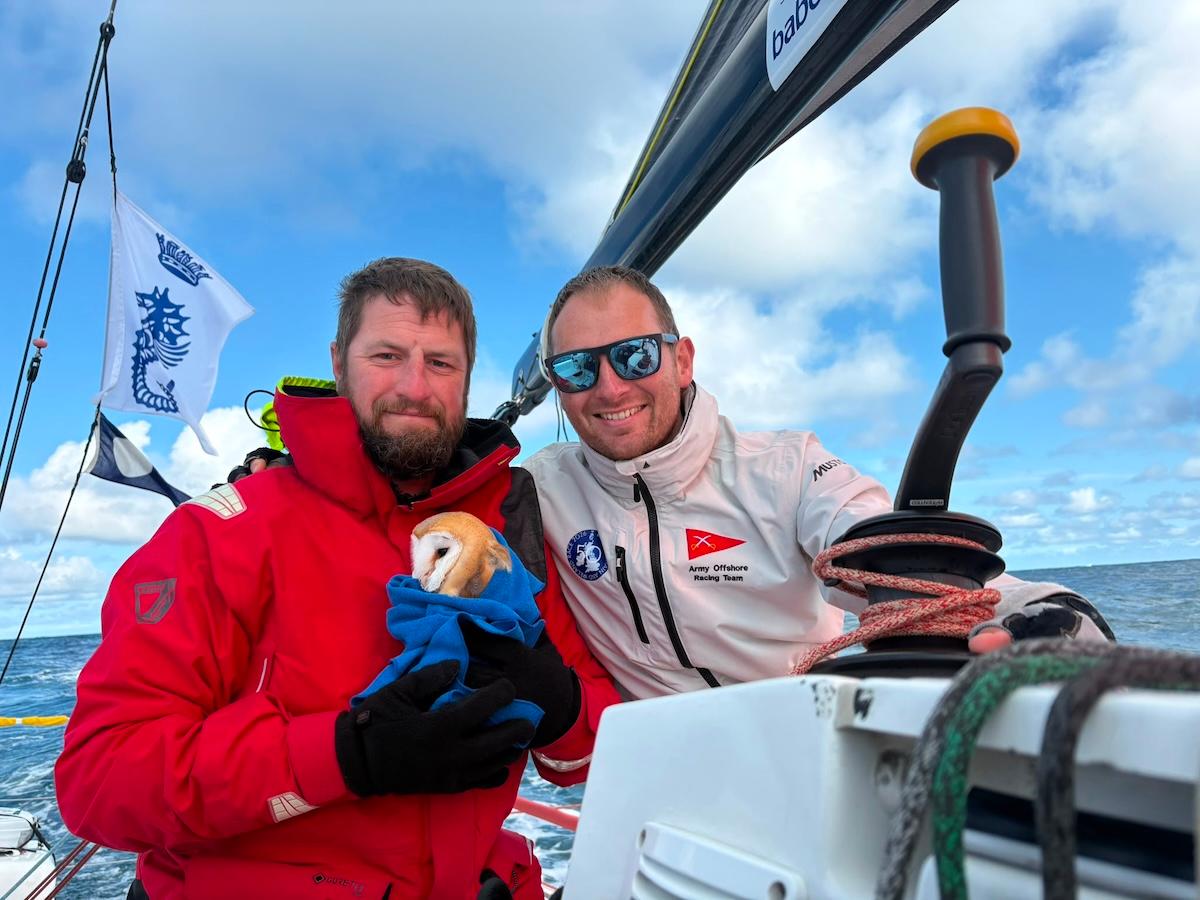 Exhausted barn owl rescue on © Fujitsu British Soldier
But no wildlife encounter produced quite as extraordinary a story as the unexpected passenger aboard the Army Sailing Association's Fujitsu British Soldier. Approximately 70 miles offshore, an exhausted barn owl repeatedly attempted to reach the Sun Fast 3600. She fell into the sea three times before eventually collapsing on deck.
The seven serving soldiers named her Little Regina and immediately added a new owl-watch duty to their watch system. They still had a yacht race to sail, but they kept watch over their tiny passenger.
"She simply refused to give up," reported crew member Mark Petherbridge. The crew coordinated with wildlife specialists and Caister Independent Lifeboat, which eventually collected Regina near Great Yarmouth before she was transferred to specialist care.
The crew had never previously raced together as one team. For skipper Will Naylor this was his fifth Round Britain and Ireland Race, while for most of the sailors aboard it was their first. Naylor calls the event the "sailors' ultra-marathon": knowing when to push, when to protect the boat and the people and this time when the mission unexpectedly included saving an owl.
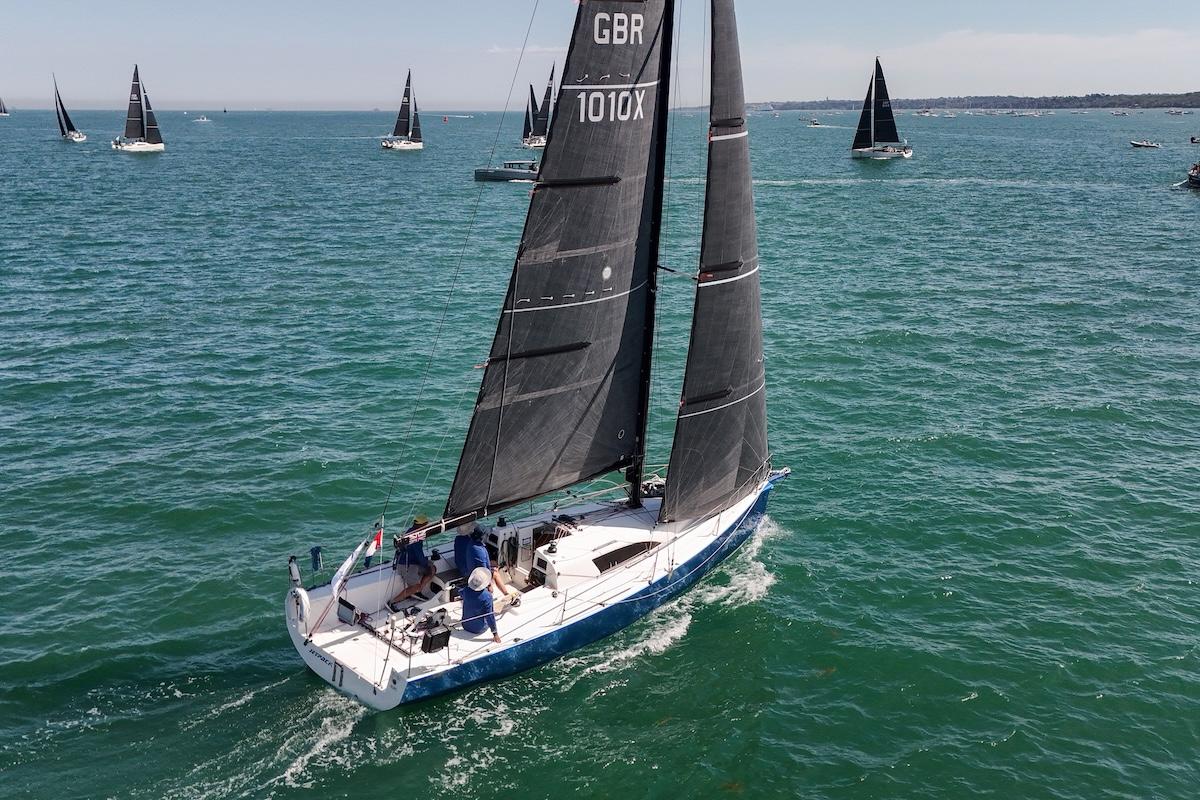 Victory for Mark Brown's JPK 1010 Jetpack in IRC Three © James Tomlinson/RORC
Jetpack: After Dinner Chat
Mark Brown's JPK 1010 Jetpack took the win in IRC Three after a campaign conceived over a few drinks at the RORC Annual Dinner. Brown had already completed six Rolex Fastnet Races when he suggested the Round Britain and Ireland Race to his regular crew. “Everybody wanted to go,” said Brown. “ Navigator Sam Jones had steadily developed into his role since joining the programme, Chris Philby-Roberts brought a decade of experience on the bow and Mark Stevens returned to the challenge around 20 years after his previous Round Britain campaigns. It is a long way, and 61 degrees north is cold. The experience was surreal. It was just amazing." Summed up Mark Brown.
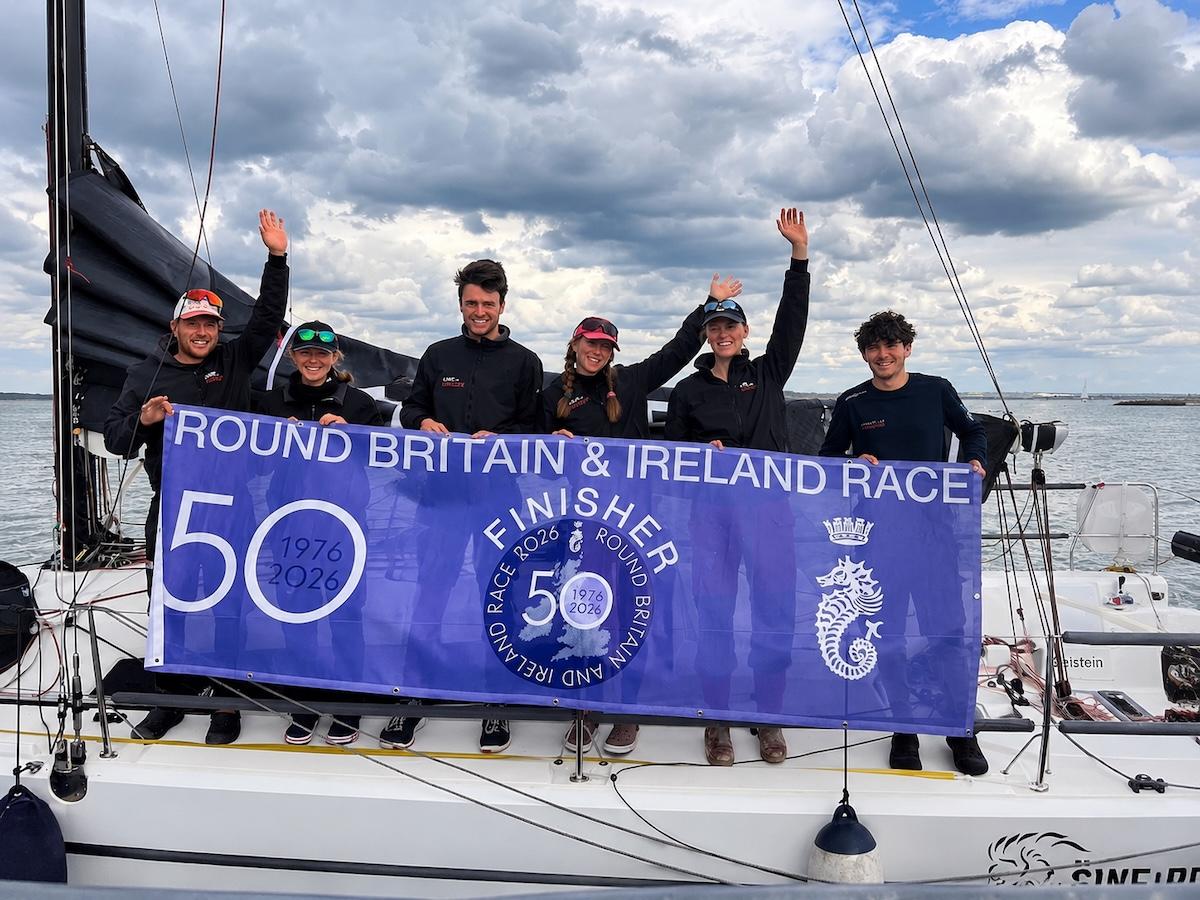 Sun Fast 3600 Löwe von Bremen, representing Bremen yacht club Segelkameradschaft Das Wappen von Bremen
Corinthian Boats, Big Stories
The young German crew of Löwe von Bremen, led by Frederick Nabor, completed the challenge they had spent years building towards. RORC Rear Commodore Andrew Tseng's restored Nicholson 55 Quailo III returned to a round-Britain course half a century after completing a very different version of the race. Rupert Baddeley sailed aboard Quailo III while his son Ollie was racing on RORC Griffin.
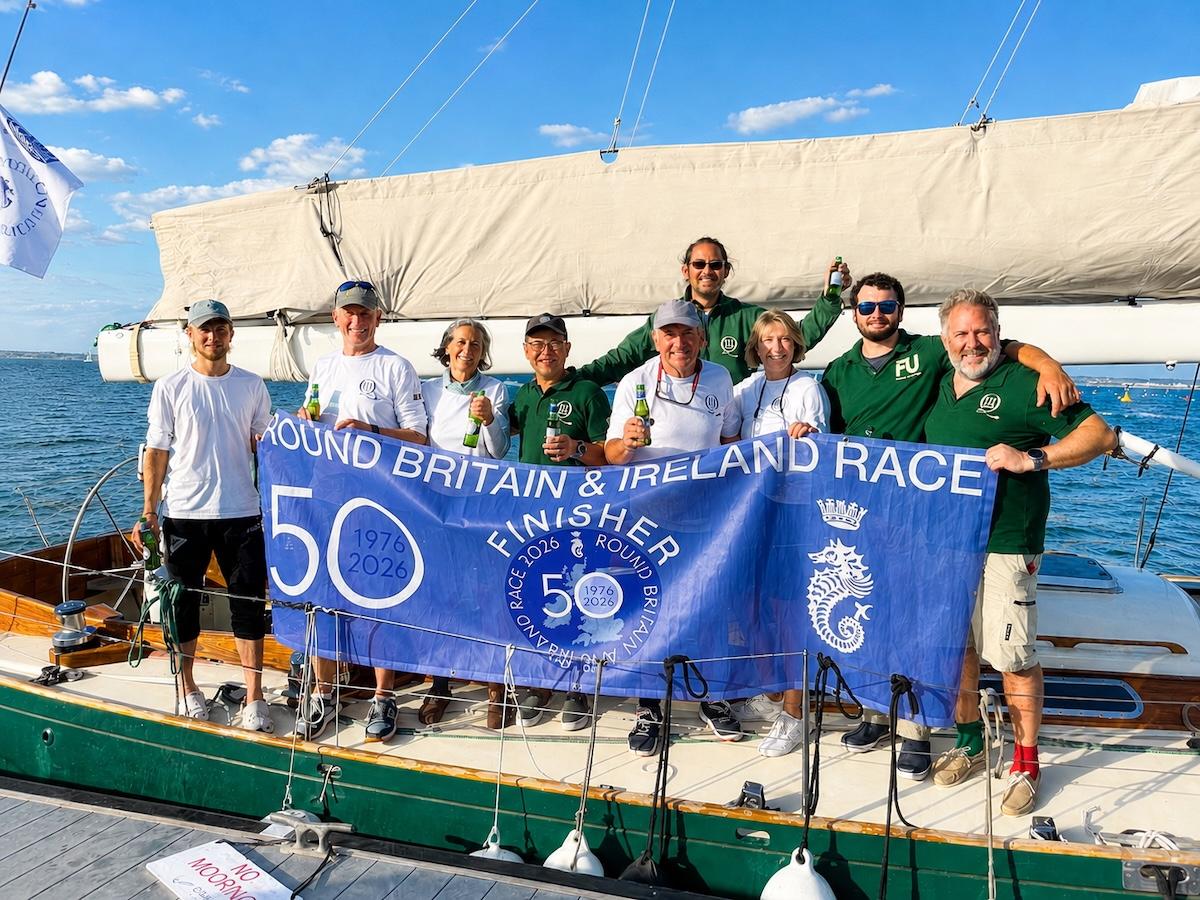 RORC Rear Commodore Andrew Tseng's restored Nicholson 55 Quailo III © RORC
Dirk Lahmann's 1978 Two Tonner Snifix Dry also returned after completing the 2022 race in 17 days. Four years ago Lahmann famously changed into his best clothes, including a cravat, before coming ashore for a gin and tonic. In 2026, Snifix Dry went around again and cracked open a magnum of champagne emblazoned with the race logo.
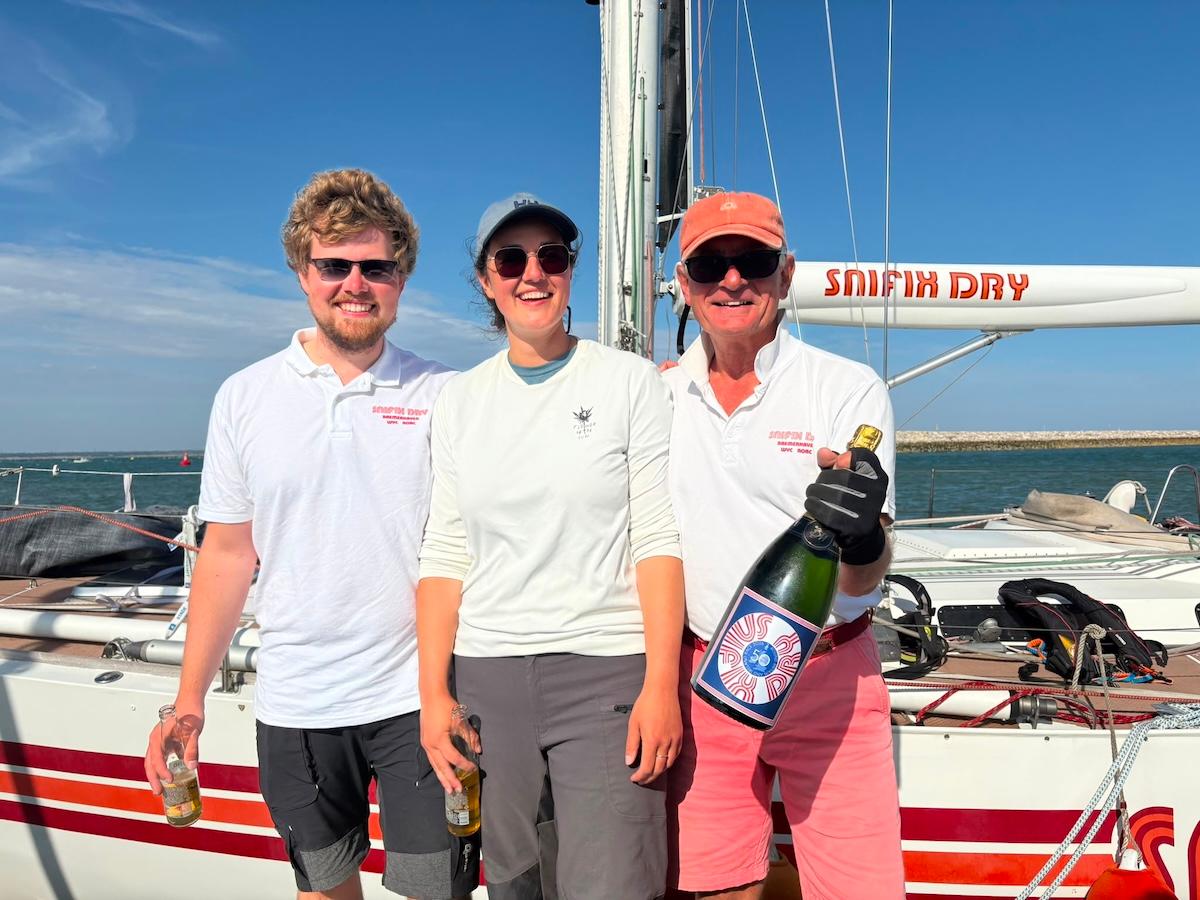 Dirk Lahmann's 1978 Two Tonner Snifix Dry team celebrate in style! © RORC
Passing It On
Kuba Szymanski's Polished Manx 2 supplied another story about what offshore racing can pass from one generation to another. Szymanski completed the race with young Polish sailor Maciej Lato in 14 days 20 hours, significantly improving on his previous performance.
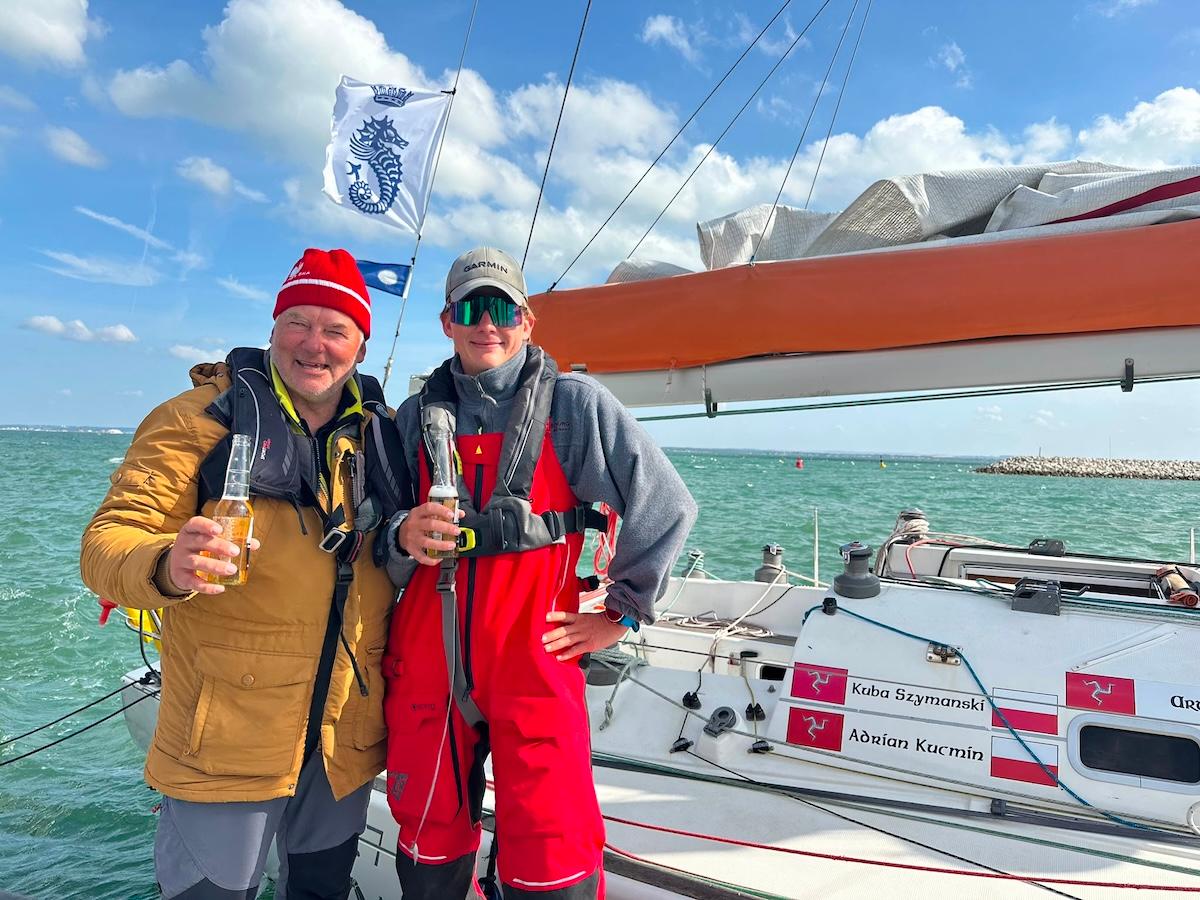 First 40.7 Polished Manx 2 - Kuba Szymanski and Maciej Lato share a well-deserved beer after finishing © RORC
For Lato it was his first Round Britain and Ireland Race and the longest race he had ever completed. Their partnership began years earlier when Lato simply picked up the telephone and asked Szymanski whether he could sail with him. After one passage, Lato volunteered to remain aboard for another couple of days simply to clean and tidy the boat. Years later they were racing around Britain and Ireland together, cooking pizzas and gnocchi, exchanging relentless banter.
"We love being at sea," said Szymanski. "We always give everything we have and then we arrive when we arrive." Next year Lato may even skipper Polished Manx in the Rolex Fastnet Race with a young Polish crew.
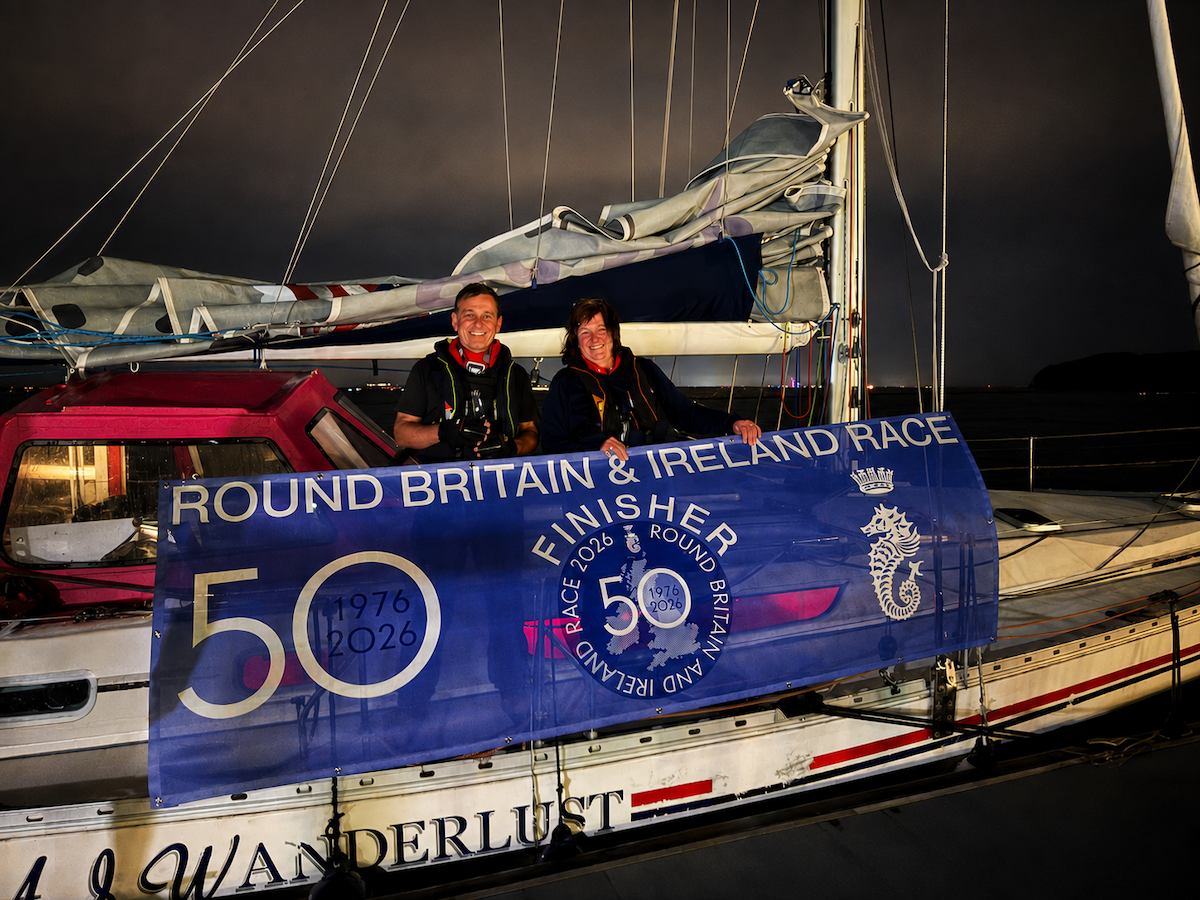
The Final Chapter - AJ Wanderlust
The achievements of Corinthian sailors have always been at the heart of the RORC ethos, and long-standing RORC member Charlene Howard embodies that spirit. Sailing with Andrew McGregor, Howard brought AJ Wanderlust home as the final finisher of the 2026 RORC Round Britain and Ireland Race in an elapsed time of 17 days 09 hours 25 minutes 01 seconds. The boat has undergone a major refit since her previous race, including a new rig installed in June 2025 and designed for long-distance adventure sailing and heavy weather.
“Finishing was never a question,” commented Charlene. “We may not be at the top of the fleet, but we NEVER give up. Parking for nearly two days in the Celtic Sea really defined our race and meant we missed the downwind romp up the west coast of Ireland, but we still had some fantastic sailing. The headlands, tides, wind farms and fishing fleets keep you constantly alert. At 1,805 miles the Round Britain and Ireland is a proper offshore race. Why do I keep coming back? I simply love sailing - maybe offshore racing is just an addiction!”
The Long Way Home
“Every boat and every sailor that has taken part in this race has achieved something extraordinary,” said RORC Sporting Director Ben Willows. “Over 1,805 miles they have faced every type of weather, technical problems and countless challenges, making this an enormous test both mentally and physically. The determination throughout the fleet has been remarkable. Of course, we celebrate our winners, but completing this race and simply taking on the challenge deserves huge respect. The stories that have come from right across the fleet, from the front of the race to the final boats home, are what make the RORC Round Britain and Ireland Race so special.”
Fifty years after the first edition, the essence of the RORC Round Britain and Ireland Race remains the same. To the outside world it is measured in miles and seconds. For the sailors that experience it, it is remembered for their stories.
The RORC Round Britain and Ireland Race is held every four years. For racing and supporter enquiries contact The Royal Ocean Racing Club: www.rorc.org.
Results: https://sailracehq.com/live-results
Race Website:
Competitor Blog: live-competitors-blog
Photo Gallery: https://gallery.rorc.org/index?/category/1936-rorc_round_britain_and_ireland_race
RORC YouTube: https://www.youtube.com/@RORCRacing.